Hyrox Training
Eight runs. Eight stations.
One program that trains all of it.
Hyrox rewards the athlete who can run a sub-5-minute kilometre then push a 150kg sled then run again. Pelaris periodises your running engine, compound strength, and station capacity into one cohesive 12-14 week build.
8 km
Running split across the race
8
Functional stations
80 min
Typical recreational finish
12-14
Weeks to race-ready
Four pillars
Train every demand, not just the fun ones
Most Hyrox prep is run-heavy because runs feel productive. The athletes on the podium have the strength numbers too. Pelaris makes you train what you would otherwise avoid.
Running engine
Eight 1km runs decide Hyrox. If your aerobic base is weak, the stations compound the fatigue. Pelaris programs an intelligent run block, tempo, threshold, long runs, scheduled around your compound lifts so neither compromises the other.
Compound strength
Sled pushes, lunges, wall balls, Hyrox rewards the strong. Pelaris builds lower-body strength (squats, deadlifts, unilateral work) and upper pulling capacity (rows, farmers carries) on the days it will least interfere with your running.
Work capacity
The race is 80+ minutes of repeated running-to-station transitions. Pelaris programs Zone-3 intervals, EMOM ladders, and sled+run brick sessions that simulate the actual demand, not generic "conditioning."
Station specificity
Burpee broad jumps, sandbag lunges, sled pulls, these are learned skills. Pelaris weaves station-specific work into your program so race-day is rehearsed, not novel.
See the program you would run
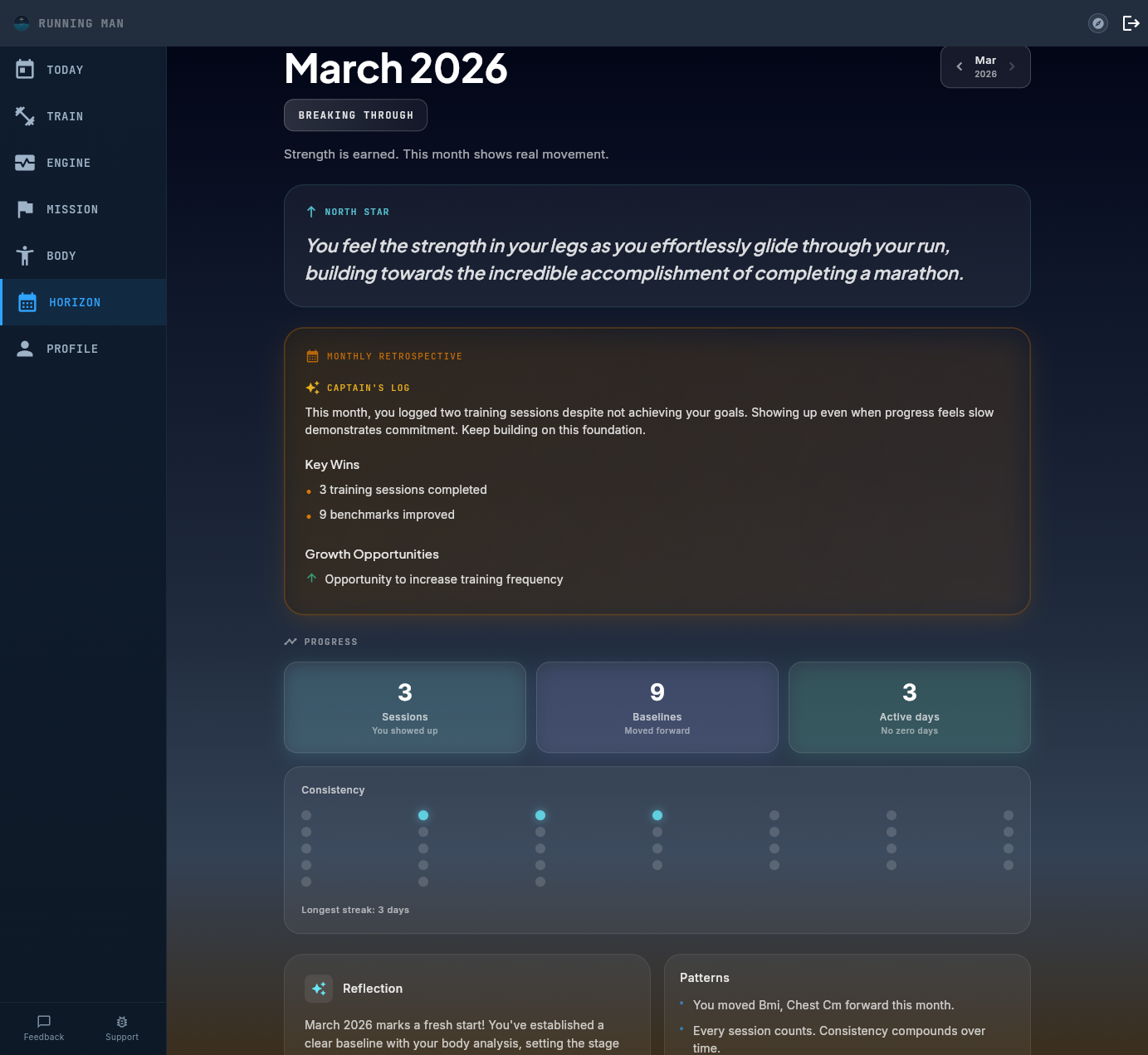
Weekly schedule built around your availability. Run quality, strength, brick work, rest, sequenced so each adaptation lands. Each session carries a coach note explaining why it is on that day.
Periodisation
A 13-week arc, phase by phase
Base
Aerobic base building. Easy runs, progressive strength work, low-intensity station familiarisation. Build the engine before revving it.
Build
Threshold runs, sled work, compound strength at 75-85% 1RM. Brick sessions introduced, run + station + run. The tolerance phase.
Specific
Race-pace 1km repeats, full-speed station practice, full 4-station race rehearsals. Strength shifts to power maintenance.
Taper
Volume down, intensity maintained, sleep and nutrition dialled in. One short race-pace rehearsal. Fresh legs, sharp head.
Coach in your pocket
Adjust the program in plain English
You picked up a niggle in your Achilles. You have a work trip Friday. Your sled numbers jumped faster than expected. Tell the coach, it rewrites the surrounding week to absorb the change without breaking the periodisation.
Every change is reasoned. Every rewrite cites what moved and why. That transparency is the point: you should understand your program, not just follow it.
How the coach reasons about your plan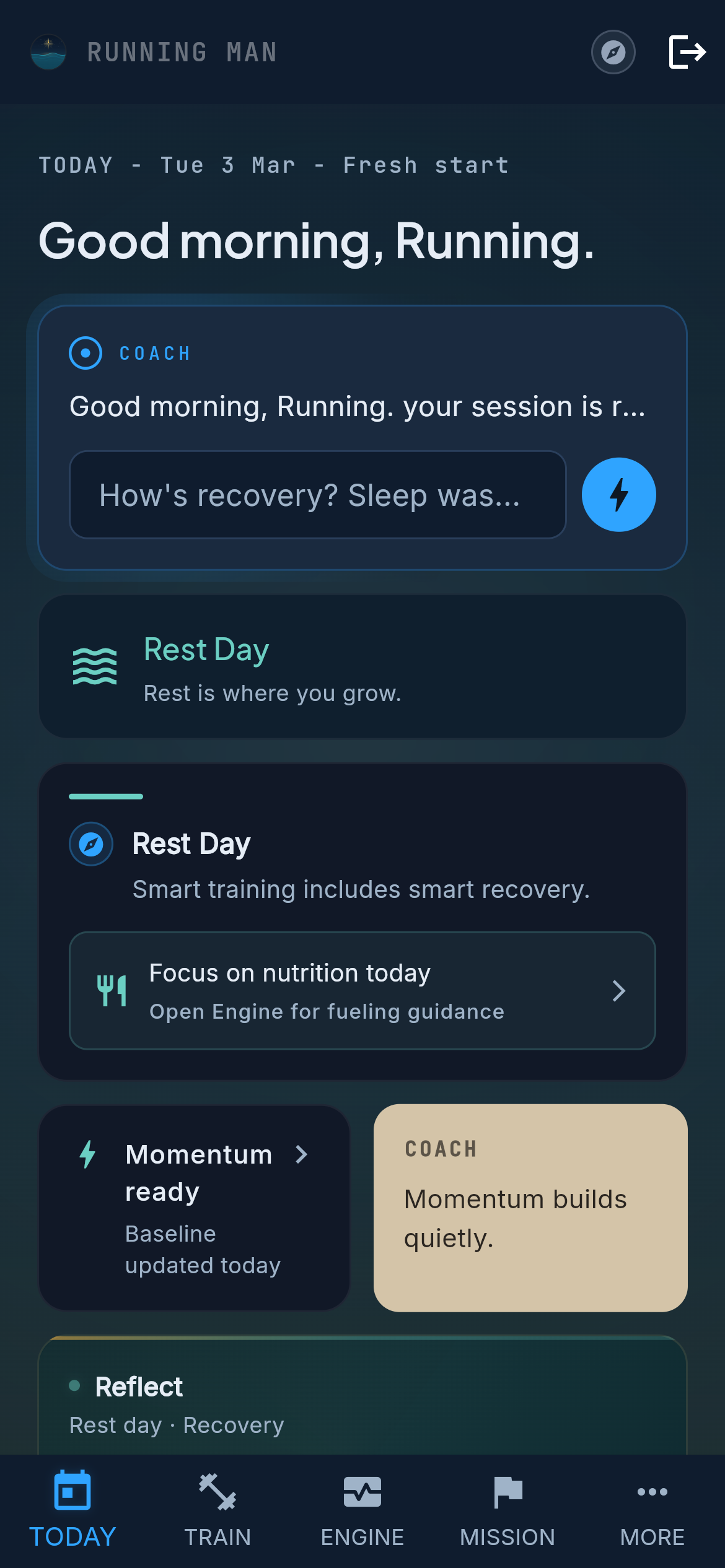
Questions
Hyrox training, answered
How many days a week do I need to train for Hyrox? +
Do I need to do CrossFit-style training for Hyrox? +
How do I train the sled push without access to a sled? +
Will running training hurt my strength? +
I am crossing over from CrossFit / running, can I still prepare in 12 weeks? +
Does Pelaris handle race week tapering? +
Get race-ready with a program that thinks about you
Describe your race date, your current mileage, your gym access. Pelaris builds the 13-week arc and walks it with you.