Tennis Training
Power in the serve.
Durability in the shoulder.
Tennis is lateral explosiveness, rotational power, and 90 minutes of stop-start intervals, all landing on one dominant shoulder. Pelaris builds strength, conditioning, and prehab that match the sport's real demands.
90 min
Average 3-set match
400+
Direction changes per match
1:2-1:3
Work-to-rest ratio on court
Shoulder
The joint that decides longevity
Four physical pillars
Train every demand the court makes
Tennis is the most asymmetric sport most athletes play. Pelaris accounts for that, both in the program structure and the injury-risk model underneath.
Rotational power
Every ground-stroke is a hip-led rotation. Pelaris programs rotational med-ball work, cable chops, and single-leg power training so the serve and forehand come from hip drive, not shoulder strain.
Lateral speed
Tennis is short-burst lateral acceleration, stop, rebound. Pelaris builds side-shuffle mechanics, lateral bounds, and reactive agility drills that transfer directly to on-court coverage.
Match endurance
A three-set match is 90+ minutes of repeated high-intensity intervals. Pelaris programs interval conditioning that matches tennis work-to-rest ratios, not steady-state running that barely transfers.
Shoulder resilience
Rotator cuff, scapular stability, thoracic mobility, the overhead athlete survives on the durability of the shoulder. Pelaris bakes prehab into every week as its own block, not an afterthought.
Asymmetry-aware
The app that knows your dominant side
Tennis loads one arm. Over time, imbalances accumulate, scapular asymmetry, forearm mass differentials, altered hip rotation. Pelaris tracks both sides through the body analysis module and surfaces the gap before it becomes injury.
Targeted unilateral programming corrects what is drifting. The body analysis updates monthly so you can see the intervention working, or flag it to the coach if it is not.
See body analysis features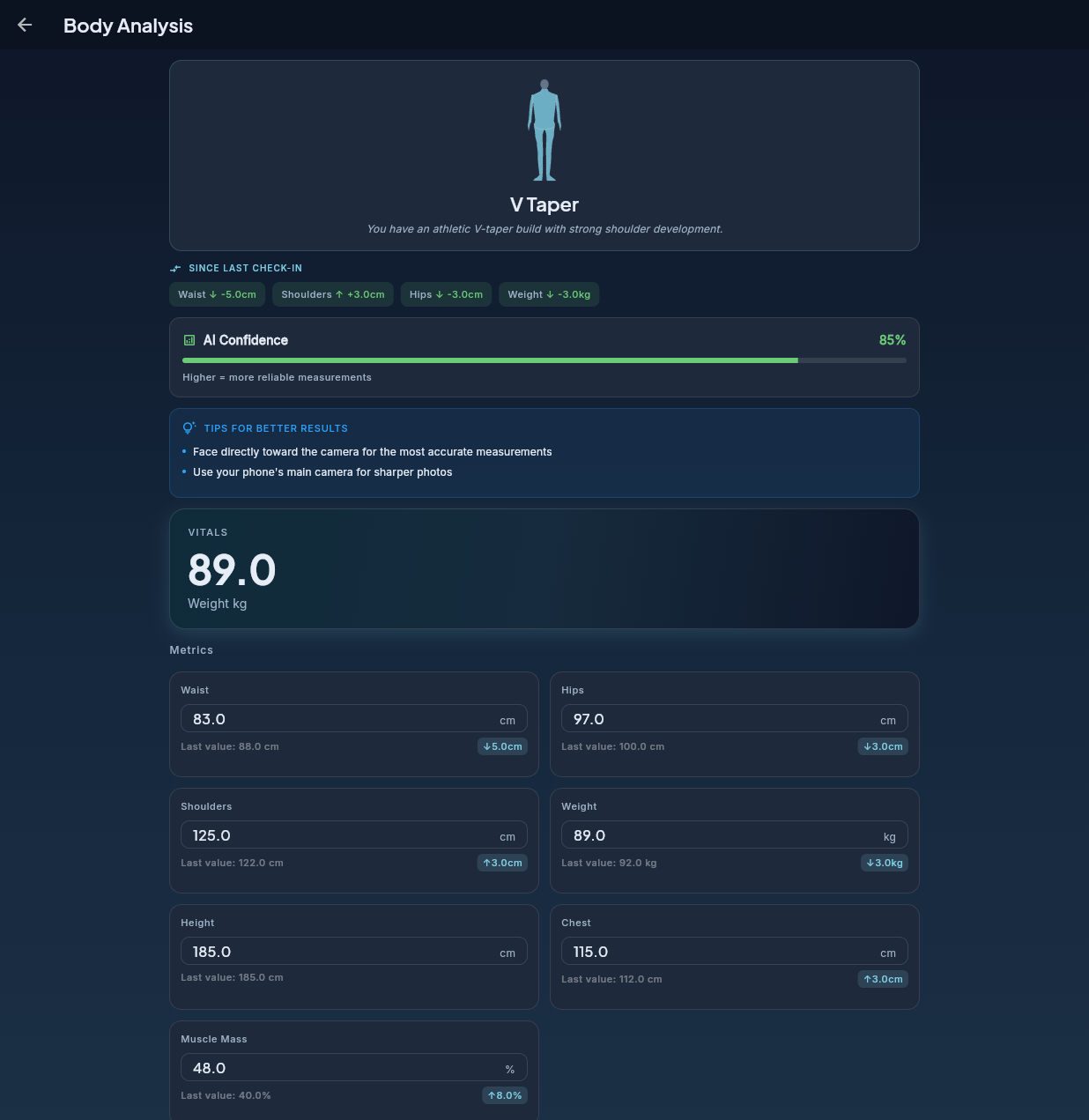
Phase by phase
A season-aware program
Your training should not look the same in tournament week as in off-season. Pelaris adjusts automatically based on the season you are in.
In-season (match play)
One strength session (lower-body primary), two on-court sessions, one conditioning block, two rest/recovery days. Volume protects match performance, not fatigue it.
Pre-season (build)
Three strength days, two conditioning blocks, three court sessions, one full rest. Strength numbers climb; on-court volume calibrates to your recovery.
Off-season (development)
Maximum strength focus, rotational power development, general conditioning, reduced court hours. The window to get physically bigger without match stress competing for adaptation.
Tournament taper
Volume down 40%, intensity maintained, extra shoulder prehab, two hit sessions to stay sharp, strength maintained at low load. Fresh legs, fresh arm, sharp instinct.
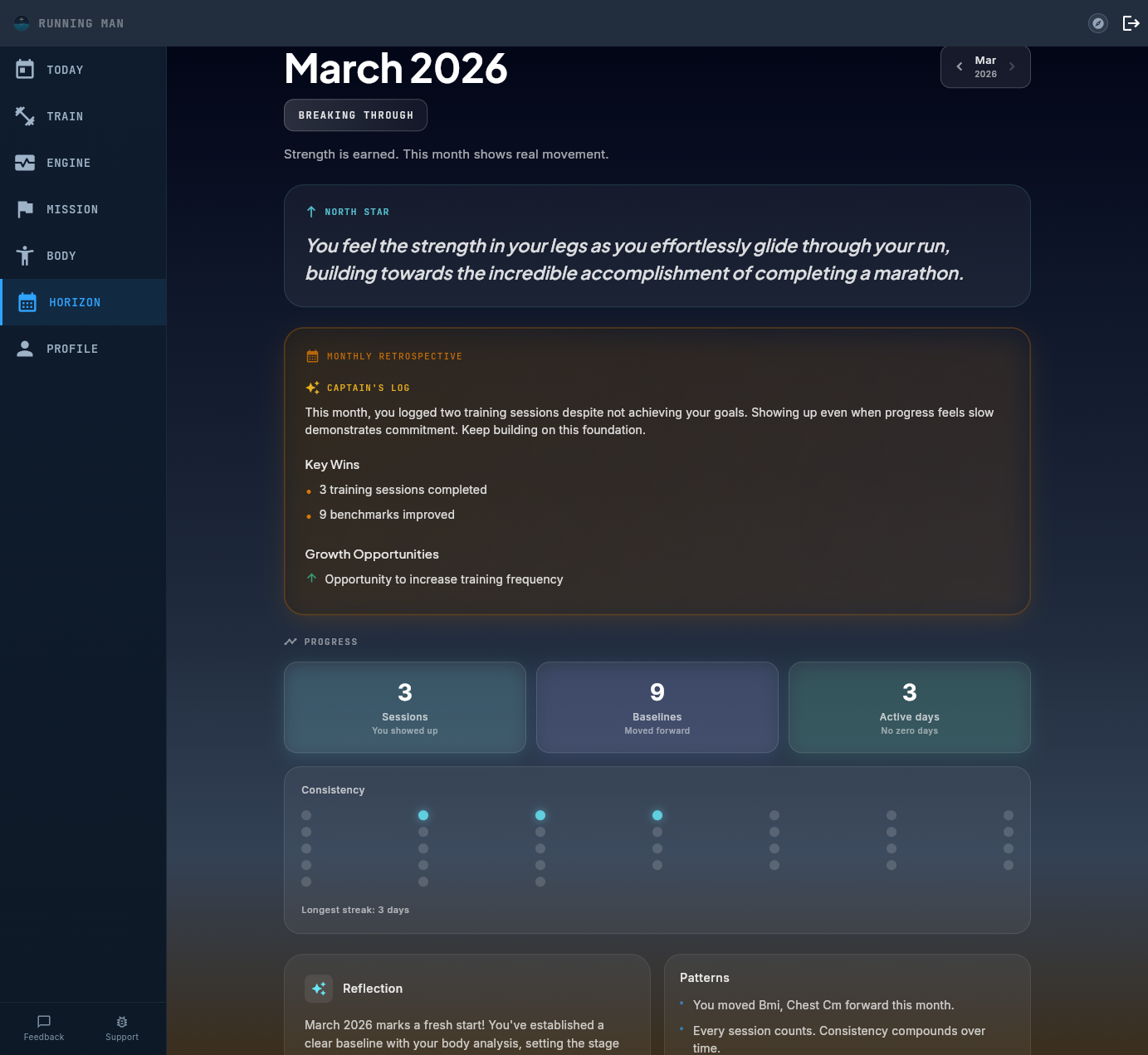
Plan your month, hit your tournament
Match day is the peak. Everything else serves it, volume climbs, tapers, and rebuilds on a cadence your body can actually recover from.
Questions
Tennis training, answered
How does Pelaris fit around my court sessions? +
I play tennis plus another sport, can Pelaris handle that? +
Does training really help my serve speed? +
How do I avoid tennis elbow? +
What is the right strength training for a tennis player? +
Can I use Pelaris alongside my coach? +
Train the body that plays the match
Strength, conditioning, prehab, recovery, programmed around your on-court schedule. No guesswork.