Body Types
The Block build:
power you can stand on.
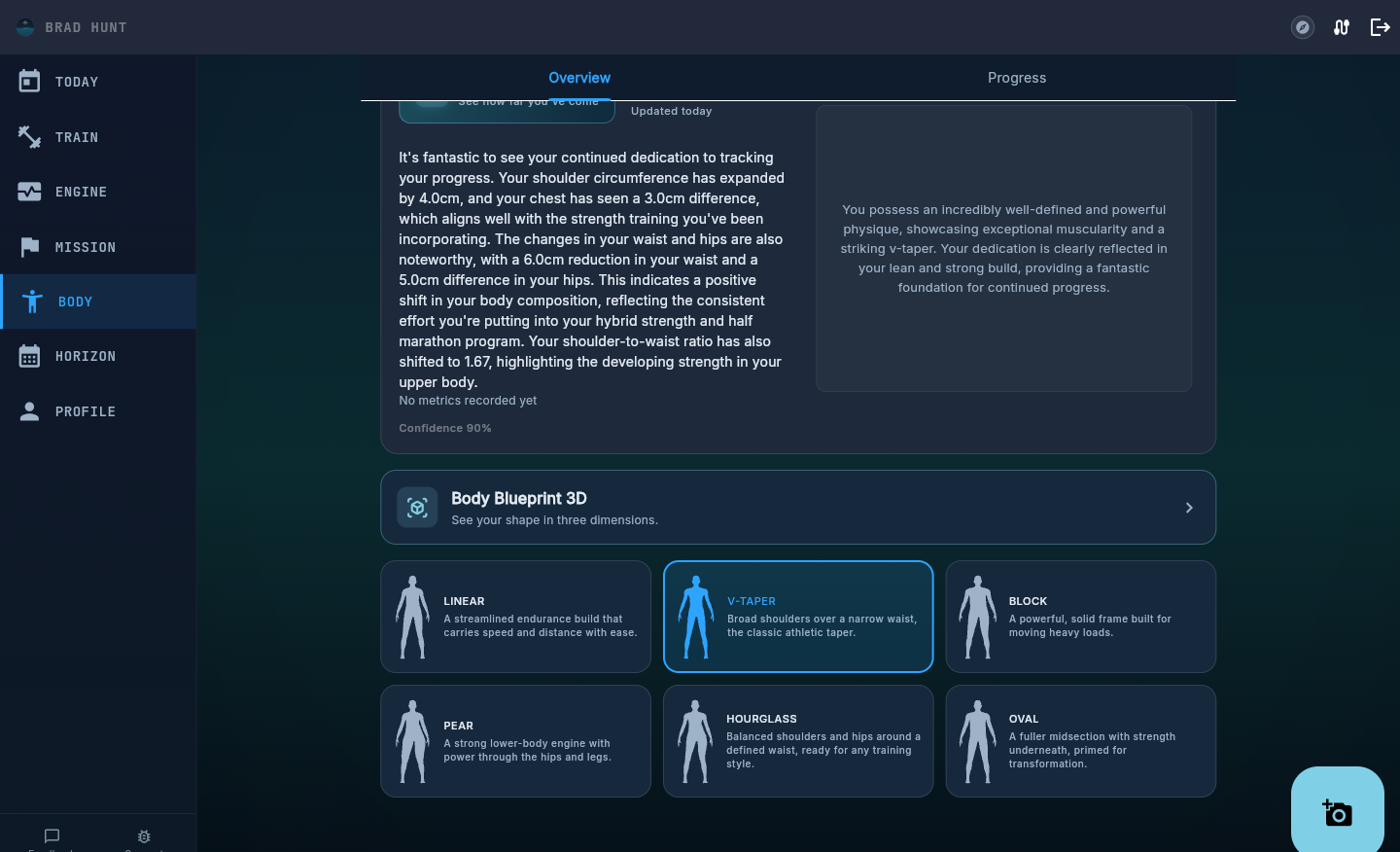
A powerful, solid frame built for moving heavy loads. That is the Block archetype as Pelaris reads it from your scan, and it is the build front rows, throwers and strongman fields are made of. Here is the training that suits it, and how to point it at your goals.
Natural strengths
What a Block build is naturally good at
Force. A solid, compact frame puts power into the ground, into a barbell, or into an opponent with a stability other builds train years to approximate. Pressing feels at home on this structure, deadlifts travel a shorter distance, and heavy carries feel less like a party trick and more like a birthright.
That is exactly the profile collision sports are built around. The demands of rugby union, rugby league and American football, driving through contact, holding position, repeating powerful efforts, read like a Block frame’s CV. The same qualities show up anywhere heavy things get moved: strongman events, throws, the platform.
The smartest Block programs build on the strength that is already there, then add the engine and the mobility that let it play out for eighty minutes rather than eight seconds.
Program shapes
Training styles that fit the frame
Proven strength systems
5/3/1, conjugate-style rotation, block periodisation. Structured heavy training with planned progression is where this frame earns its name, and Pelaris runs the real methodologies rather than a random heavy day.
Contact sport S&C
Position-aware strength and power work wrapped around a match calendar. Intensity pulls back before game day, collision load is respected in the recovery maths, and the gym serves the sport rather than competing with it.
Engine work that respects mass
Sled pushes, bike erg intervals, swimming, incline walking. Conditioning choices that build a big aerobic base while being kind to joints carrying real force, so the engine grows without the strength paying for it.
The shape of a week
A sensible Block training week
A starting shape, not a prescription. Pelaris adapts the actual week to your sport, your hours, and how your last sessions went.
- Mon
Lower body strength: squat pattern leads, heavy and crisp
- Tue
Conditioning: bike erg or sled intervals, work capacity without pounding
- Wed
Upper body strength: press and row in balance, carries to finish
- Thu
Rest, mobility, or an easy swim
- Fri
Full body power: hinge pattern, jumps, throws, speed emphasis
- Sat
Match day, or a longer aerobic session if there is no sport in season
- Sun
Off. Recovery is where the strength consolidates
From here to your goal
Training toward common goals
Chase bigger totals
Squat, bench, deadlift. Structured strength methodologies progress the numbers block after block, and eating to support strength training makes sure the frame has the raw material to keep building.
Build the engine to match
A Block frame with an aerobic base is a different athlete: same power, available all game. Progressive low-impact conditioning grows the engine while the lifting holds, and your scans will show the proportions holding steady while the fitness underneath transforms.
Honest by design
A starting point, not a verdict
An archetype describes your proportions today, and it moves as your training does. A conditioning-heavy season can streamline a Block frame; a strength block can deepen it. Body scanning tracks visible shape and proportion trends, it is not a medical instrument, and our comparison of scan methods lays out exactly where it sits next to DEXA and the rest.
Scan, program, watch it change
Two photos tell Pelaris your archetype. Your goals tell it where you are headed. The AI programs strength the frame deserves and the engine it will thank you for, and the 3D Body Blueprint morphs through every check-in so the trend is something you can see, not just feel.
Block build, answered
What workouts are best for a block body type? +
Is a block body type good for rugby and contact sports? +
How do I find out if I have a block build? +
Built for heavy. Programmed for you.
Scan in a minute, then let Pelaris program the strength your frame was made for.