Body Types
The Linear build:
made for the long game.
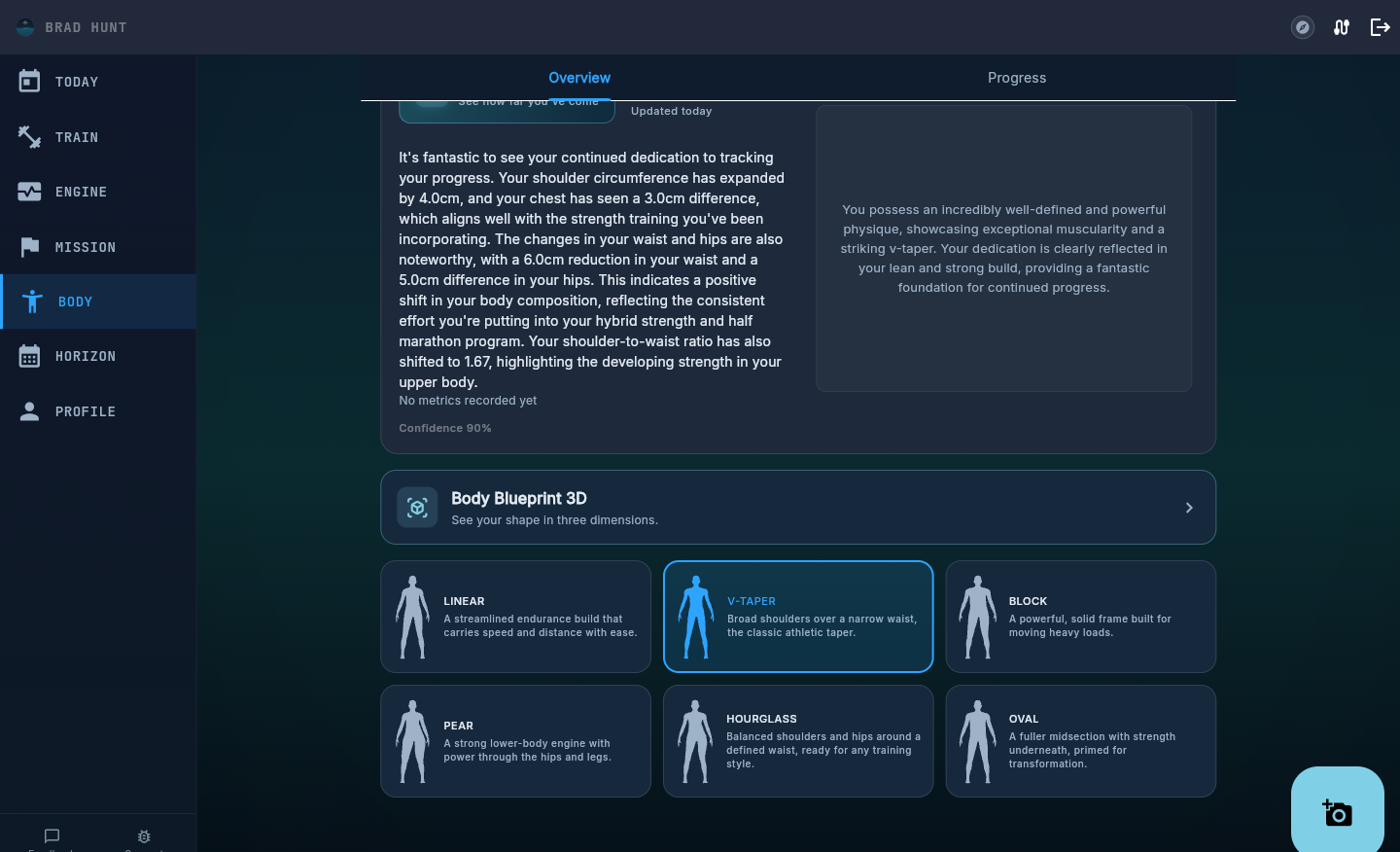
A streamlined endurance build that carries speed and distance with ease. That is how Pelaris describes the Linear archetype the moment your scan lands, and it is the frame every distance runner has envied at a start line. Here is how to train with it, and toward whatever you want next.
Natural strengths
What a Linear build is naturally good at
Covering ground. A streamlined frame means less mass to carry per kilometre, efficient cooling on long efforts, and a running economy most builds have to work years for. Linear athletes tend to absorb aerobic volume well, recover quickly between easy sessions, and hold form deep into long races when others are fighting theirs.
That efficiency compounds across every endurance discipline: road and trail running, cycling, open-water swimming, triathlon. It also makes low-intensity aerobic work unusually productive, which is why the zone 2 research reads like it was written with this build in mind: a big easy base, a small amount of sharp quality, and the engine grows season after season.
The smartest Linear programs lean into all of that and then add the one ingredient the frame does not hand you for free: force. A small, consistent dose of strength and power work turns an efficient engine into a fast one.
Program shapes
Training styles that fit the frame
Polarised endurance
Around 80% of weekly volume easy, 20% genuinely hard. The Linear frame absorbs this split beautifully: the easy volume builds the aerobic base it was made for, and the hard sessions sharpen race pace without burying recovery.
Strength that sharpens
Two short gym sessions a week: heavy compound lifts in low volumes, hill sprints, jumps. The goal is power per stride and injury resistance, adding force to the frame while leaving plenty of recovery for the endurance work that leads.
Multisport weeks
Swim, ride and run in one schedule. The build recovers well between disciplines, which makes triathlon and swimrun natural fits, and Pelaris sequences the sessions so each one supports the next.
The shape of a week
A sensible Linear training week
A starting shape, not a prescription. Pelaris adapts the actual week to your sport, your hours, and how your last sessions went.
- Mon
Easy aerobic session with a handful of relaxed strides at the end
- Tue
Strength: heavy compounds, low volume, finished with jumps or hill sprints
- Wed
Quality endurance: intervals or tempo, the one genuinely hard session of the first half of the week
- Thu
Recovery: rest, an easy spin, or an easy swim
- Fri
Second short strength session, upper body and core emphasis
- Sat
Long session: the cornerstone run or ride, kept conversational
- Sun
Off, or the easiest of easy sessions if you feel like moving
From here to your goal
Training toward common goals
Run a marathon
The Linear frame is the classic marathon build, and the work is mostly about patience: growing the long run, protecting the easy days, and adding marathon-specific strength work so the final 10km belongs to you. Pelaris periodises the whole arc from your race date backwards.
Race a triathlon
Three disciplines suit a build that recovers fast between sessions. The craft is in the sequencing, which is exactly what triathlon strength programming and multisport scheduling handle: swim quality when you are fresh, bike volume where it fits, run frequency without the injury bill.
Add muscle to the frame
Plenty of Linear athletes want more shoulder and more strength without giving up the engine. The play is a dedicated strength block, three lifting days, endurance dialled back to maintenance, eating to support it, then returning to endurance-led weeks carrying the new power. Your scans will show the shoulder trend moving while the waist holds.
Honest by design
A starting point, not a verdict
An archetype describes your proportions today, and it moves as your training does. Train for strength and the Linear build broadens; return to distance and it streamlines again. Body scanning tracks visible shape and proportion trends, it is not a medical instrument, and where it sits among DEXA, bioimpedance and the rest is covered honestly in our body scan comparison.
Scan, program, watch it change
Two photos tell Pelaris your archetype. Your goals tell it where you are headed. The AI builds a program that trains with the Linear frame rather than against it, and the 3D Body Blueprint morphs through every check-in so you can watch the shape trend that your training is writing.
Linear build, answered
What workouts are best for a linear body type? +
Can a linear body type build muscle? +
How do I find out if I have a linear build? +
Built for distance. Programmed for you.
Scan in a minute, then let Pelaris build the program your frame was made for.