Body Types
The V-Taper:
the classic athletic line.
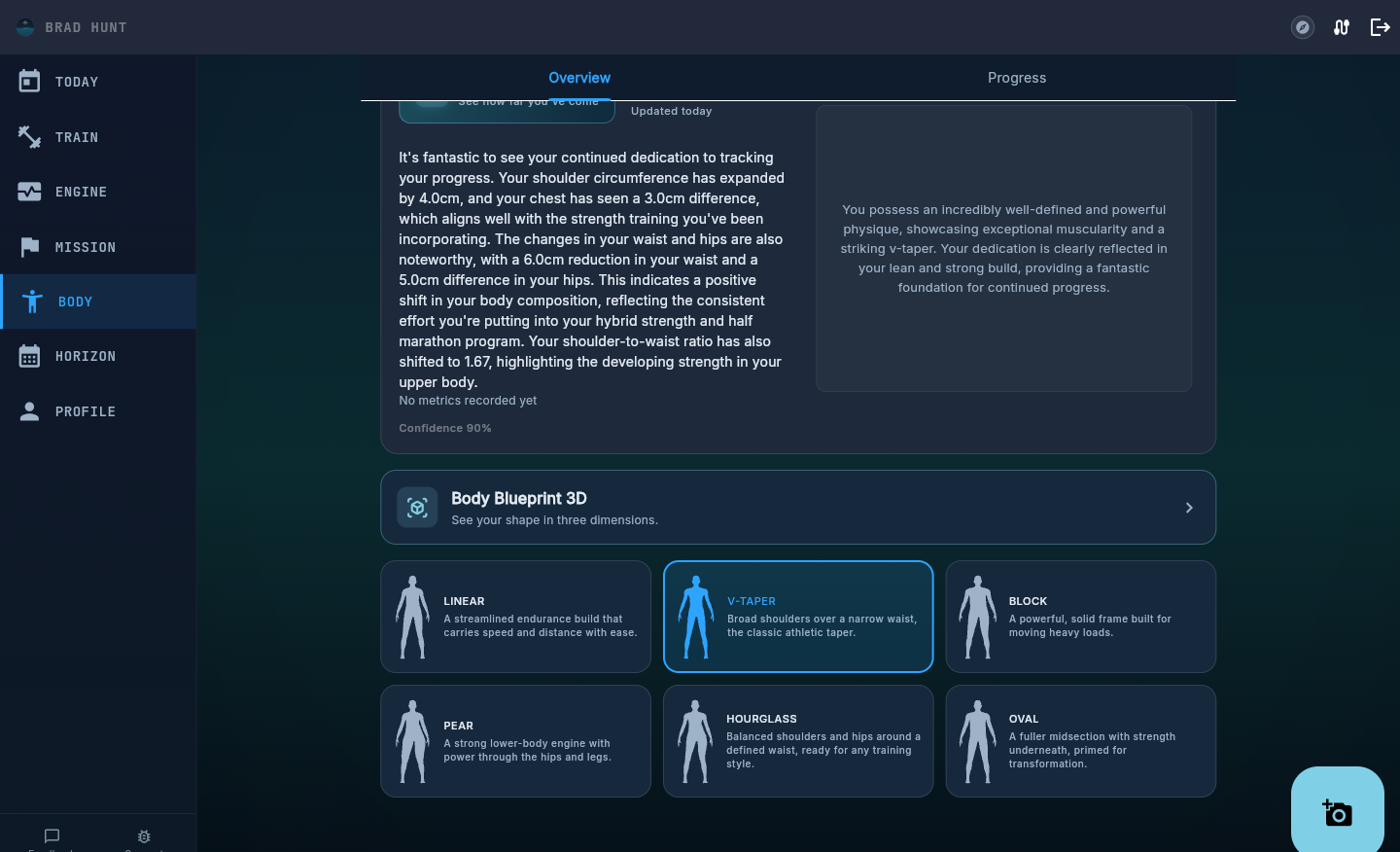
Broad shoulders over a narrow waist, the classic athletic taper. That is the V-Taper as Pelaris reads it from your scan, the silhouette swimming built its reputation on. Here is the training that suits it, and how to build from it toward what you want next.
Natural strengths
What a V-Taper is naturally good at
Pulling. Broad shoulders and a wide lat structure mean pull-ups, rows and anything overhead come more easily to this build than to most. The narrow waist underneath is not just aesthetics, it reflects a proportion pattern that keeps the centre of mass compact while the levers up top do their work.
It is the swimmer’s silhouette for a reason: the catch and pull phases of every stroke reward exactly this shoulder-led power, which is why strength training for swimmers is practically a V-Taper training manual. The same proportions carry over to gymnastic skill work, where CrossFit athletes with this build find muscle-ups and handstand work arrive sooner than the leaderboard suggests they should.
The best V-Taper programming honours the taper and keeps the whole athlete moving forward: serious lower-body work, a healthy pull-to-press balance, and progression you can measure.
Program shapes
Training styles that fit the frame
Upper/lower splits
Two upper days, two lower days, driven by progressive overload. The upper days build on the frame’s pulling strength; the lower days make sure the squat and hinge numbers climb just as steadily.
Swim + gym
Pool sessions for the engine and feel, dryland for force. The build was practically made for this pairing, and shoulder-aware programming keeps the volume between water and weights in balance.
Skill + strength
CrossFit-style programming that pairs gymnastic skill work with barbell strength. The taper gives the skills a head start; structured strength blocks turn that head start into scores.
The shape of a week
A sensible V-Taper training week
A starting shape, not a prescription. Pelaris adapts the actual week to your sport, your hours, and how your last sessions went.
- Mon
Upper body: pulling first, pressing second, rotator cuff work to finish
- Tue
Lower body: squat pattern, single-leg work, calves and core
- Wed
Conditioning: swim, intervals, or a skill-and-engine mixed piece
- Thu
Rest or easy aerobic movement
- Fri
Upper body: pressing emphasis this time, balanced with rows
- Sat
Lower body: hinge pattern leads, jumps or sled work for power
- Sun
Off, or an easy swim to keep the shoulders happy
From here to your goal
Training toward common goals
Swim faster
The build’s pulling power is the raw material; swim-specific strength programming turns it into distance per stroke. Pelaris balances pool yardage against gym volume so the shoulders that drive the taper stay resilient while the times drop.
Grow the taper, strengthen the base
More width up top, more drive down low. A pull-biased upper program grows the shoulder line while squat and hinge blocks give the frame a power base to match. Every scan updates your shoulder-to-waist ratio, so the trend you are training for is a number you can watch.
Compete in CrossFit
Gymnastic skills arrive early for this build, so the scoreboard gains come from pairing them with barbell strength and a bigger engine. A structured CrossFit program periodises all three instead of hoping the daily class covers it.
Honest by design
A starting point, not a verdict
An archetype describes your proportions today, and it moves as your training does. The taper can widen with pulling volume or soften during a distance block, and both are just chapters in the same trend line. Body scanning tracks visible shape and proportion, it is not a medical instrument, and our comparison of scan methods is upfront about where it sits next to DEXA and the rest.
Scan, program, watch it change
Two photos tell Pelaris your archetype. Your goals tell it where you are headed. The AI builds a program around the V-Taper’s strengths, and the 3D Body Blueprint morphs through every check-in so the shoulder line you are building is something you can rotate, compare and replay.
V-Taper, answered
What workouts are best for a V-taper body type? +
Is a V-taper the same as a swimmer’s build? +
How do I keep a V-taper while getting stronger? +
The classic taper. Your program.
Scan in a minute, then let Pelaris build training that plays to the frame.